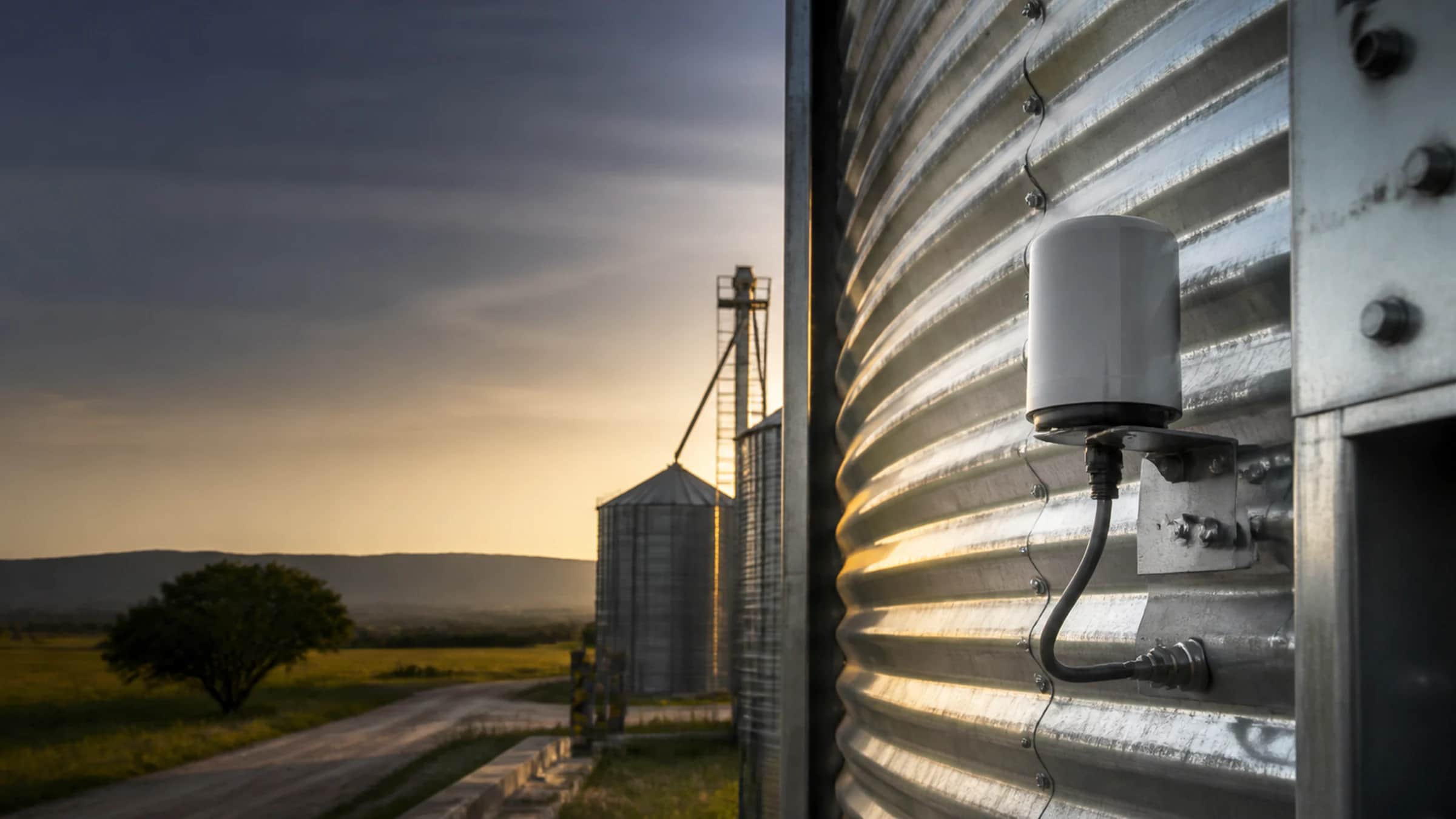
Monitoring
Continuous readings of the variables defined for the site.
 AgroEscudo
Bolivian AgTech for post-harvest protection
Grain does not warn you. AgroEscudo does.
We monitor critical conditions in silos and collection facilities so teams can act before risk becomes loss.
IoT sensors · Alerts · History · Logbook · Reports
AgroEscudo in motion
A view of the system connecting sensors, communications, and platform to turn storage conditions into operational information.
Conceptual audiovisual representation of the system and MVP. It does not depict a commercial installation or a completed pilot.
The invisible risk
It begins when no one can see what is happening inside storage in time.
Temperature, humidity, and trend turn an isolated inspection into an evidence-based decision.
Invisible conditions. Late decisions. No history.
Temperature
Thermal change
Humidity
Environmental condition
Trend
Risk evolution
Solution
A complete system that turns storage signals into operational action.
Continuous readings of the variables defined for the site.
Configurable notices when a condition moves out of range.
Events and actions brought together in one shared source.
Clear evidence for technical and operational follow-up.
How it works
The node is adapted to the site and records variables agreed with the operator.
Readings are stored and transmitted periodically, even with intermittent connectivity.
The system identifies conditions outside the thresholds configured for the pilot.
History, alerts, and actions remain available for follow-up and reports.
Platform developed
Current conditions, alerts, history, and operational evidence so data does not remain trapped inside the sensor.
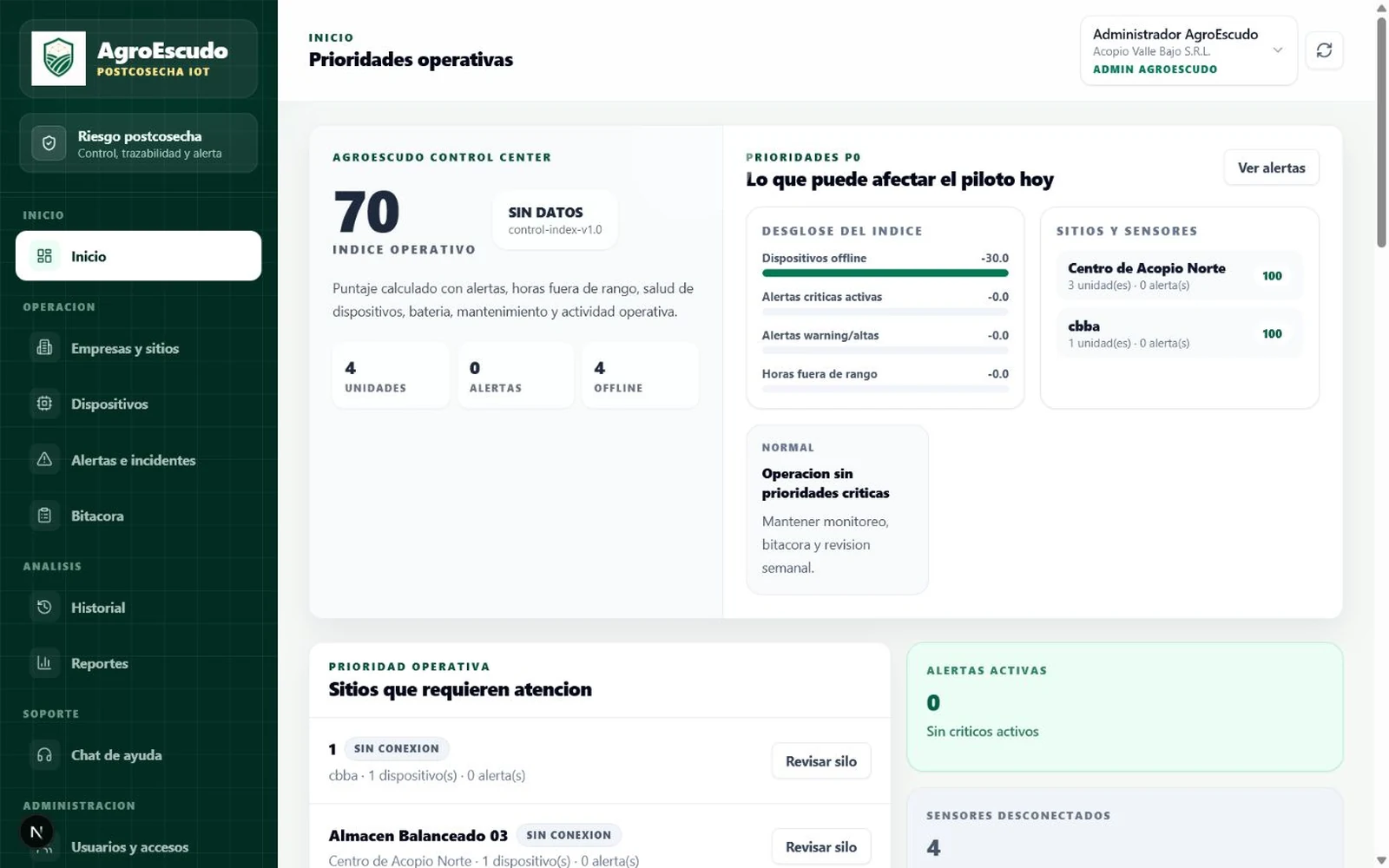
Screenshot of the existing MVP with demonstration data.
Why AgroEscudo
Development close to the country's storage and post-harvest context.
The architecture can store and synchronize readings when connectivity returns.
Built for inventory, quality, and operational continuity teams.

Cochabamba · Bolivia
Founder and CEO
He leads the development and validation of AgroEscudo, connecting IoT technology with real storage and post-harvest needs.
His work combines product vision, technology development, and pilot preparation to turn silo and warehouse data into more timely operational decisions.
Working principle
Useful technology, operational evidence, and field validation.
Institutional ecosystem






Support refers to mentoring, incubation, pre-acceleration, and institutional coordination processes; it does not imply investment, certification, or a commercial relationship.
Press, recognition, and coverage
Coverage, recognition, and public participation of a Bolivian technology focused on reducing post-harvest risk through silo, warehouse, and grain collection monitoring.
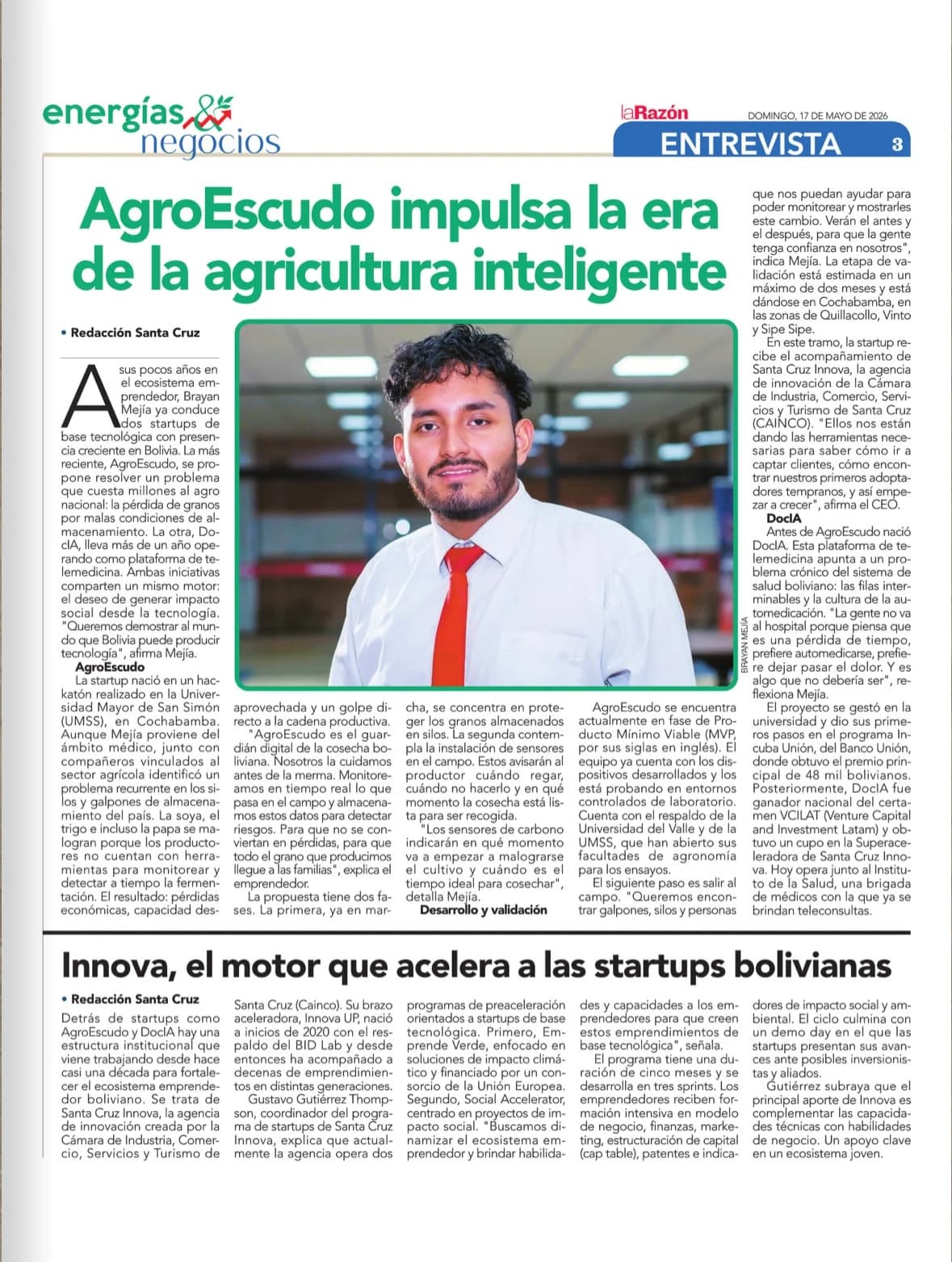
La Razón - Energías & Negocios
Prensa · 17 de mayo de 2026
Bolivia Emprende
Prensa · 21 de mayo de 2026
Reporte Startup | Bolivia & Latam
Prensa · 2 de junio de 2026
Valores que Marcan
Prensa · 2 de junio de 2026
IICA Bolivia
Reconocimiento · 2026
More indexable coverage of AgroEscudo
Press, recognition, and public participation, clearly separated from customers, investment, or certifications.
AgroTECH Bolivia 2026
Brayan Javier Mejía Saavedra and the team presented the system to agricultural industry stakeholders, explaining the risk, critical variables, and the flow from sensor to decision.
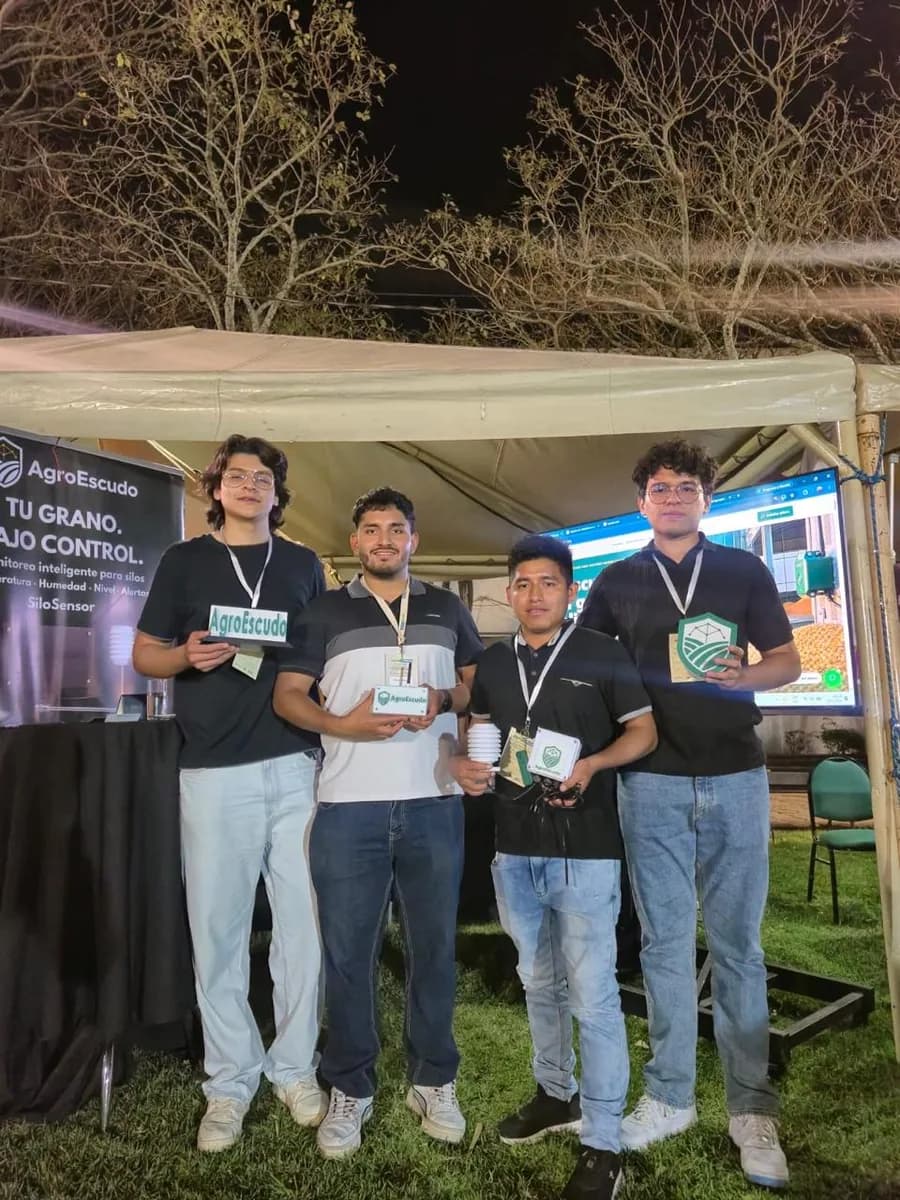
AgroEscudo team
Team and prototypes presented at the AgroEscudo stand.
Event record
Stage, architecture, stand, and engagement with the industry.
Next pilot
We are looking for storage, collection, and processing operations in Cochabamba and Santa Cruz to validate the system under real conditions and measure availability, detected events, and response times.
The assessment confirms whether the use case makes operational sense. It does not imply a free pilot or purchase commitment.
Validation path
What is observed
Frequently asked questions
Direct answers for operators considering silo monitoring, stored grain, and agricultural IoT in Bolivia.
AgroEscudo monitors temperature and humidity in silos, warehouses, and collection facilities to identify post-harvest risk conditions and support operational decisions.
The pilot is designed for variable connectivity. The architecture considers field operation and reading continuity without depending on an ideal connection.
It can be assessed for silos, warehouses, collection facilities, mills, cooperatives, feed plants, and agribusinesses with stored agricultural inventory.
Yes. The first commercial validation stage prioritizes pilot facilities in Cochabamba and Santa Cruz, Bolivia.
The first step is to contact us on WhatsApp to coordinate a site review. This information helps determine whether the operational case merits a 60 to 90 day pilot.
No. AgroEscudo does not replace operator experience. It provides data, alerts, history, and evidence to support management decisions.
At this stage, the operational pilot is the priority. The final model depends on the site, required nodes, support, and reporting needs.
AgroEscudo is designed for operations with stored grain, agricultural inventory, silos, warehouses, plants, collection facilities, and agribusinesses that need visibility and traceability.